RahNeshan Club
The aim of this case study is to design a user interface (UI) and user experience (UX) for a platform called "Rah-Neshan Club." The platform's purpose is to bring together elite individuals from all corners of Iran via the internet, organizing scientific competitions to select top talents for renowned companies. This case study will outline the key features, design considerations, and user flow for the Rah-Neshan Club platform.
The problem:
1. Technical Requirements
2. Competition Management
3. Evaluation Bias
4. Iterative Improvement
5. Scalability
The goal:
The goal of the Rah-Neshan Club platform is to create an online community that connects exceptional individuals from various fields across Iran and facilitates talent selection for prestigious companies through scientific competitions.
My role:
As a UI/UX designer at Ofoghe-no, my role is to create an exceptional user experience for participants, judges, and companies within the Rah-Neshan Club platform.
My responsibilities:
As a UI/UX designer, My responsibilities include user research, information architecture, UI design, prototyping, collaboration, usability testing, accessibility, and continuous improvement.
User research: Summary
I have successfully conducted user research for the Rah-Neshan Club platform. Through my research efforts, I gained valuable insights into the needs, preferences, and behaviors of participants, judges, and companies within the platform. By utilizing user personas, user journey mapping, feedback collection, and competitive analysis, I was able to inform my design decisions and make improvements to enhance the overall user experience of the platform. My user research played a crucial role in understanding the user's perspective and ensuring the platform meets their expectations effectively.
User research: Pain points
Based on my user research for the Rah-Neshan Club platform, I identified several pain points experienced by participants, judges, and companies. Here are some common pain points that emerged:
Participants:
1. Complex Submission Process: Participants found the submission process lengthy and cumbersome, requiring multiple steps and unclear instructions.
2. Lack of Feedback: Participants expressed a desire for more detailed feedback on their submissions, including specific areas of improvement and suggestions for future work.
3. Limited Networking Opportunities: Participants felt that the platform lacked adequate networking features, making it difficult to connect and collaborate with other participants or industry professionals.
4. Unclear Evaluation Criteria: Some participants were unclear about the evaluation criteria used by judges, making it challenging to tailor their submissions accordingly.
Judges:
1. High Workload: Judges felt overwhelmed by the volume of submissions and the time required to evaluate each one thoroughly. This led to potential delays in the evaluation process.
2. Inefficient Evaluation Tools: Judges found the existing evaluation tools within the platform to be clunky and unintuitive, hindering their ability to provide accurate and efficient assessments.
3. Lack of Communication: Judges expressed a need for clearer communication channels with participants, such as the ability to ask questions or provide guidance during the evaluation process.
Companies:
1. Difficulty in Talent Discovery: Companies found it challenging to identify and connect with promising participants who aligned with their specific talent requirements.
2. Limited Visibility: Companies felt that their brand presence and offerings were not adequately showcased within the platform, resulting in missed opportunities to attract top talent.
3.Lack of Integration: Companies desired better integration with their existing recruitment systems or processes to streamline the hiring process and manage candidate data more efficiently.
Persona
Name: Alex Chen
Age: 29
Occupation: PhD Candidate in Neurosciencer
Background:
1. Research Visibility: Alex wants to showcase their research work and findings on the Rah-Neshan Club platform to gain visibility within the academic community.
2. Networking and Collaboration: They are seeking opportunities to connect with other researchers, potential collaborators, and mentors to expand their professional network and enhance their research capabilities.
3.Career Development: Alex is interested in exploring job opportunities in both academic institutions and industry organizations that align with their research interests and career goals.
Pain Points:
Submission Challenges: Alex finds the submission process on the platform to be time-consuming, with multiple steps and a lack of clear guidelines.
Limited Feedback: They desire more detailed feedback on their submissions, including constructive comments and suggestions for improving their research work.
Discoverability: Alex feels that their research and profile visibility could be improved to attract the attention of judges, companies, and potential collaborators.
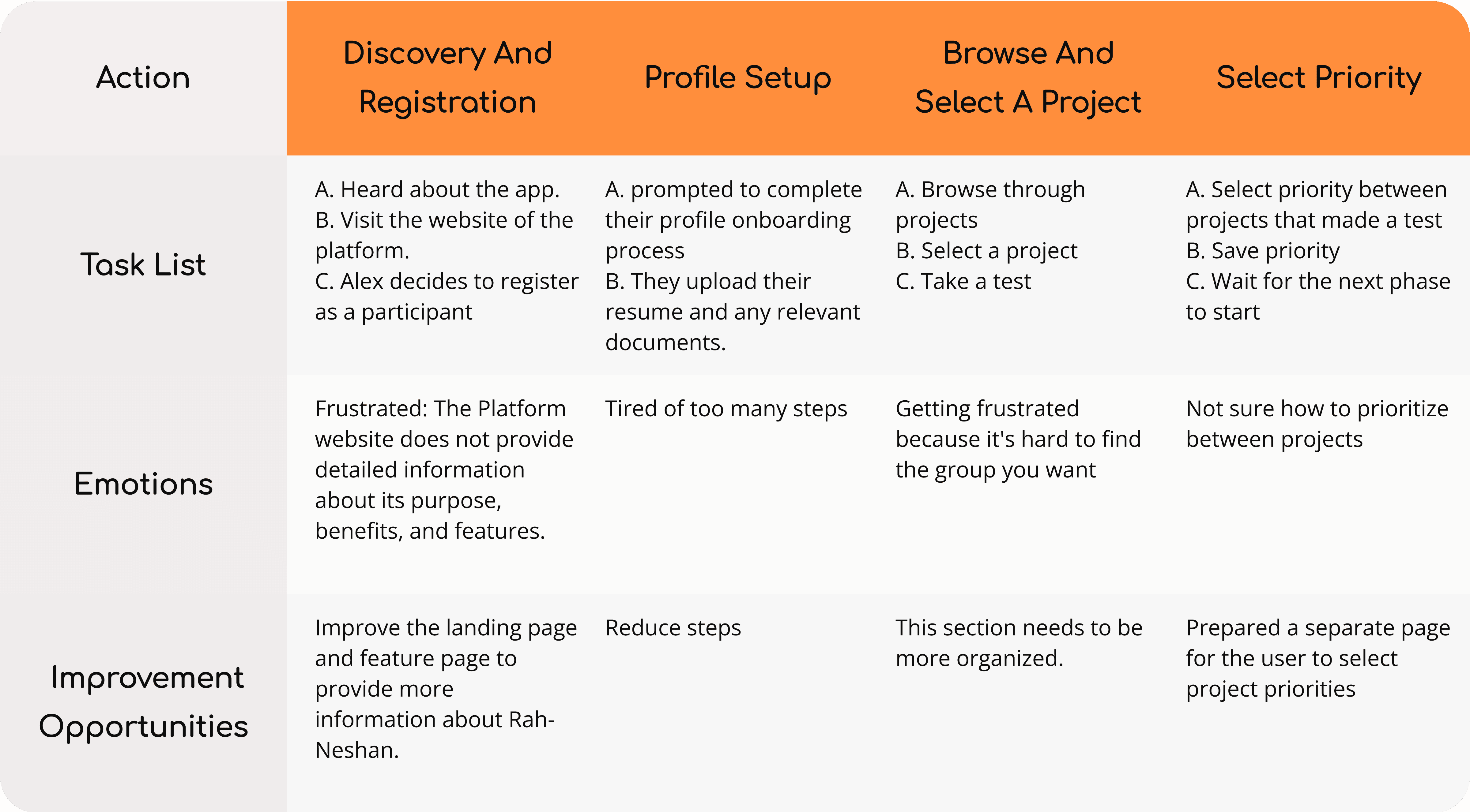
User journey map
Persona: Alex Chen
Goal: Alex aims to advance their research career and expand their professional network through the Rah-Neshan Club platform.
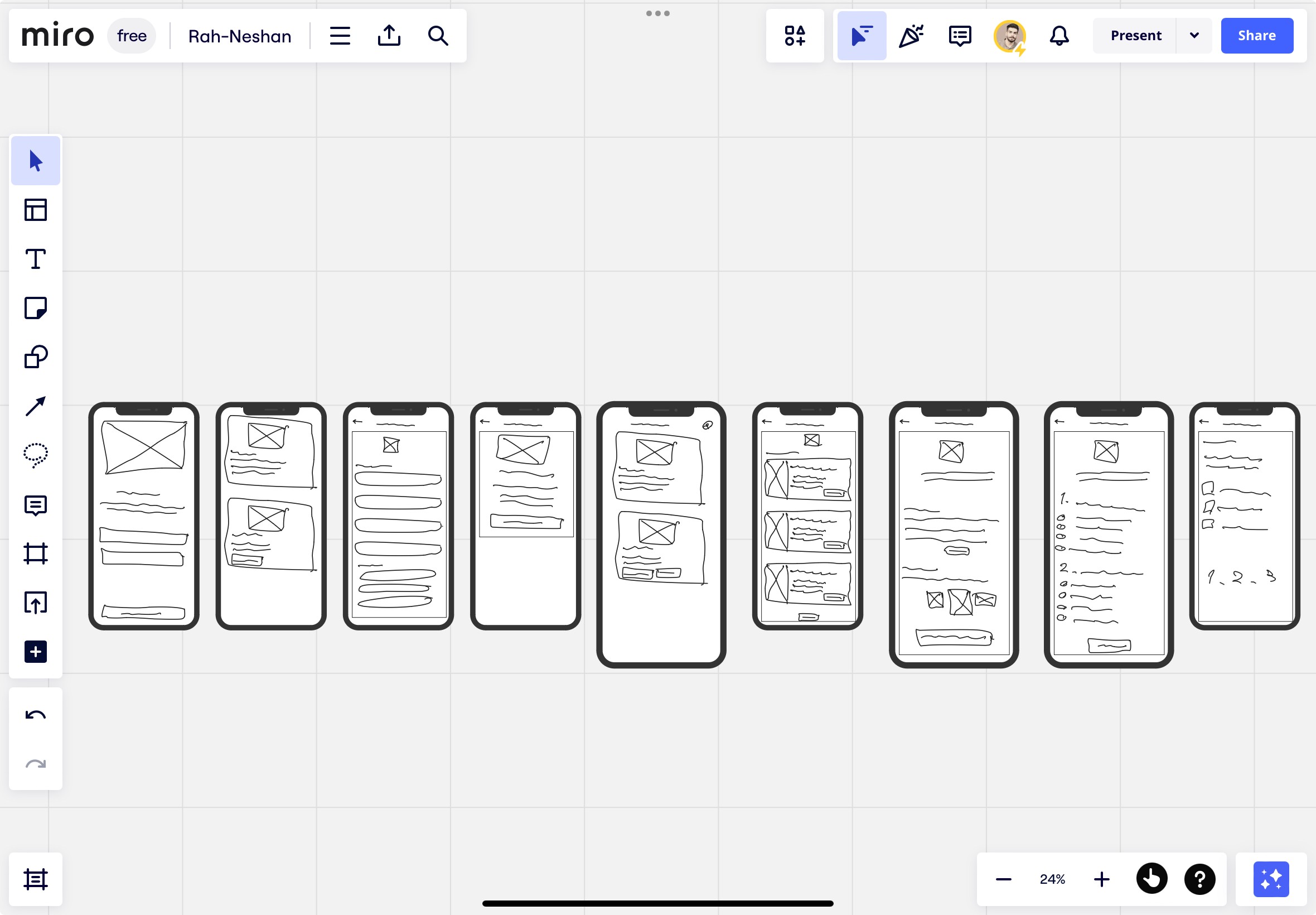
Paper wireframes
Once the data was collected, the next step was to create paper wireframes for various screens based on initial ideas. These wireframes were analyzed to determine which elements could be included in the digital wireframes and how they could address the pain points of the users.
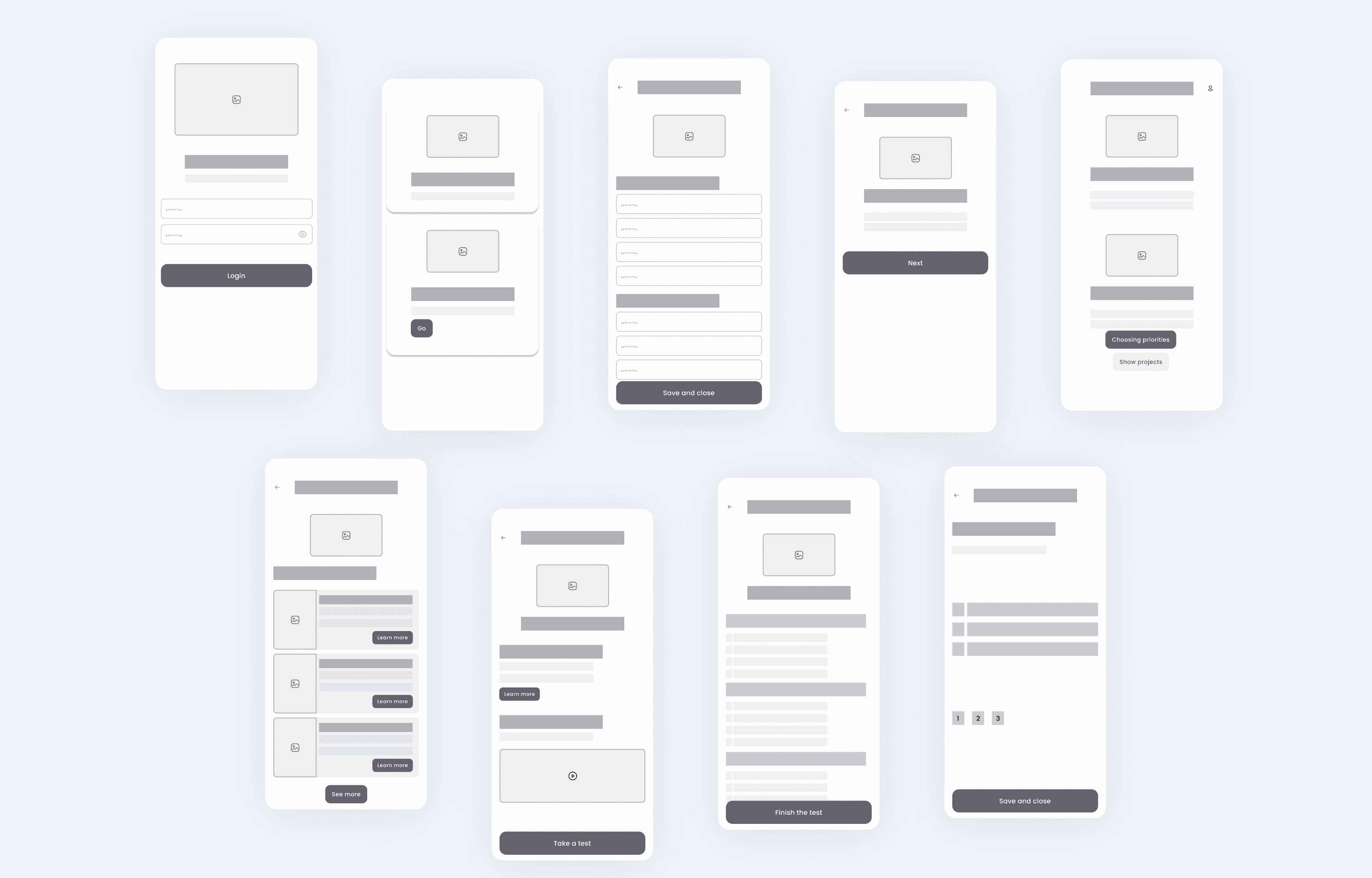
Digital wireframes
As the initial design phase continued, I made sure to base screen designs on feedback and findings from user research.
Low-fidelity prototype
The low-fidelity prototype demonstrated how the user worked with the platform to complete the first phase of the Rah-Neshan tournament.
Usability study: Findings
During the evaluation of the low fidelity prototype, valuable observations and insights were gathered, incorporating feedback from multiple participants, including professionals and individuals with diverse backgrounds.
If the user has not registered yet, there is no way for them to register.
The possibility of logging into the program using a mobile phone number.
Adding a password reset button for those who have forgotten their password.
A way to log out of the account when entering the welcome page.
The questions are all placed one after another, which is intimidating and difficult for users.
Some users mistakenly press the end exam button, even though many questions are unanswered and they can no longer view the questions.
The prioritization section is challenging for users if they have selected many updates and now need to prioritize them.
Mockups
Despite the reduction of some sections and steps in the resume builder and profile, it is still overwhelming for many users, and they become discouraged before completing them.
In the project display section, even though each project has an image, title, and description, users still find it difficult to locate projects. Therefore, there is a need for a filter and search functionality.
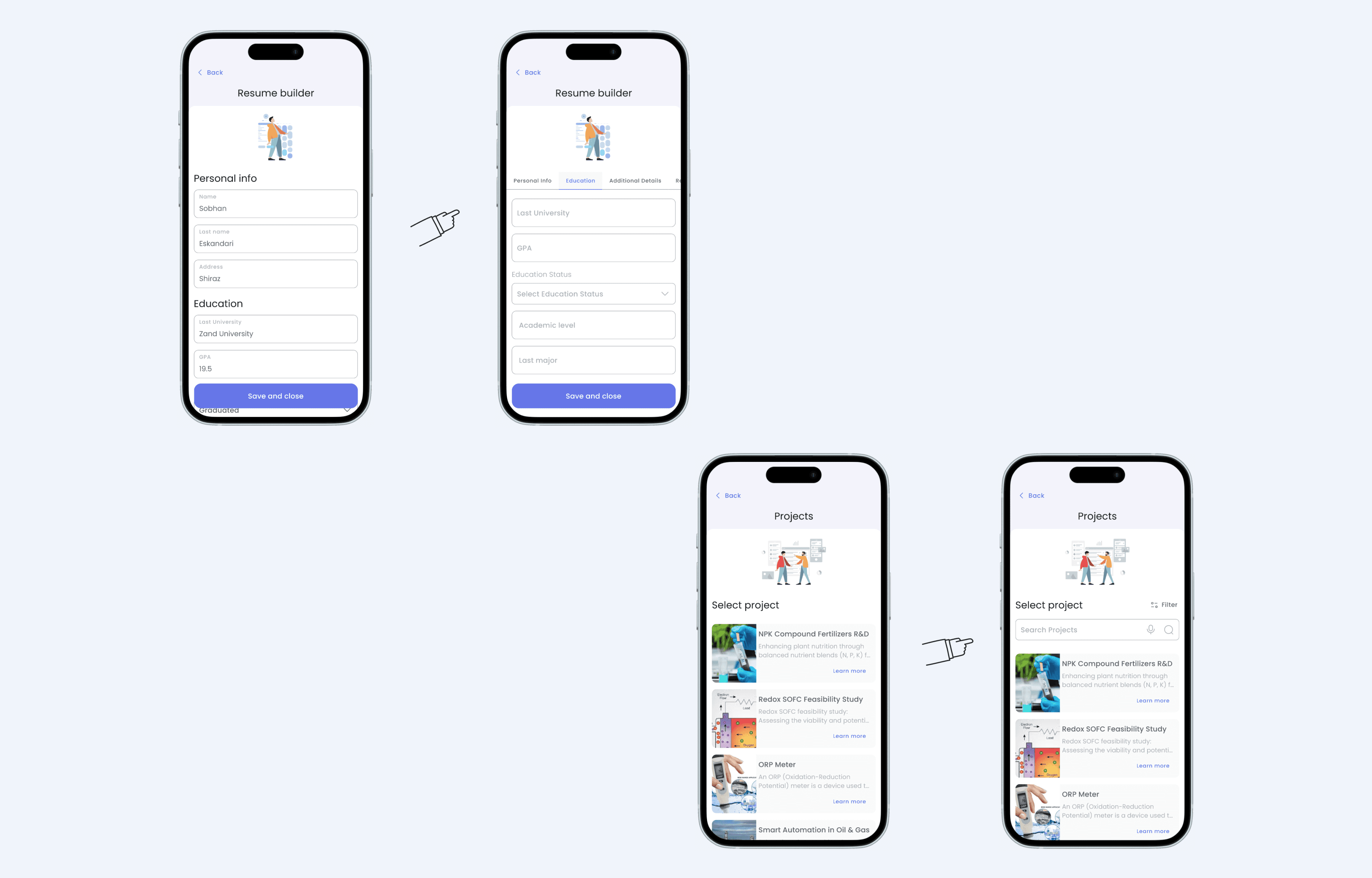
High-fidelity prototype
The final high-fidelity prototype presented users can easily log into their accounts and register more conveniently. They can effortlessly complete their profiles with ease. They can easily find the projects they desire and participate in them. They can choose priorities for their projects, submit them, and await the next stage.
Responsive website, High fidelity prototype
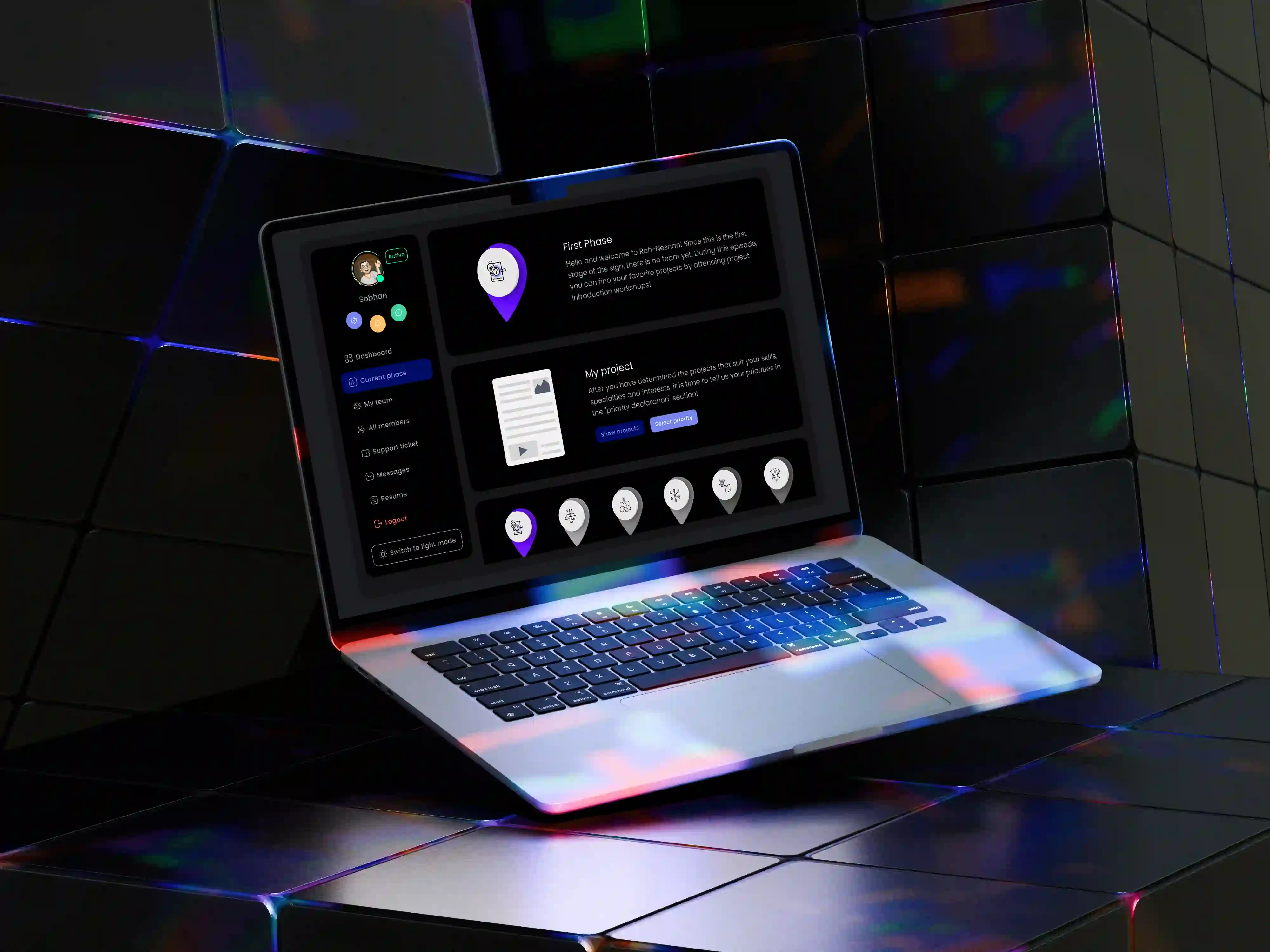
Final high-fi prototype for responsive website for desktop screen.
Accessibility considerations
Users can effortlessly search for projects using both text-based and voice-based search functionality.
Dark mode provides a visually appealing and comfortable viewing experience, especially in low-light conditions.
Impact
The first phase of the project brings significant benefits such as simplified profile creation, efficient project discovery, personalized project prioritization, enhanced professional opportunities, and time and resource savings. These impacts collectively contribute to maximizing the user experience, fostering meaningful collaborations, and facilitating professional growth within the research community.
What I learned
My interaction with this project has provided me with insights into user-centric design, streamlined onboarding, modular sections, flexibility, user empowerment, and the iterative design process. These learnings can be valuable in shaping my understanding of effective digital platform development and enhancing user experiences in future projects.
Next steps
It is imperative to conduct a subsequent round of usability studies to validate the efficacy of the implemented improvements in addressing the issues encountered by users. This will provide valuable insights into the success of the design refinements and allow for any necessary adjustments based on user feedback. Furthermore, refining and enhancing the application based on insights gathered from Hi-fi usability tests and usability studies is crucial to ensure optimal user experience and satisfaction. Additionally, conducting further user research can aid in identifying emerging user needs and requirements that demand attention and consideration in future iterations of the product design
One thing needs to be mentioned:
This project was carried out in the Persian language, and The Rezvan Sharif Specialized Guidance Institute, in collaboration with the Office of the Vice President for Science and Technology, the Biotechnology Development Headquarters, and the National Elite Foundation, has organized the "Rah-Neshan" national competitions. These competitions aim to guide elite human resources toward solving industrial projects in areas such as water and environment, health and biotechnology, intelligent transportation, and energy. The goal is to provide education, and training, identify talents, and supply human resources to meet the needs of knowledge-based companies and technology centers in the country. during its execution, multiple iterations were made in the user interface and user experience design to create the best possible interface and user experience for the target users. In this particular case, I made efforts to improve it compared to its previous state and truly deliver an enhanced result.